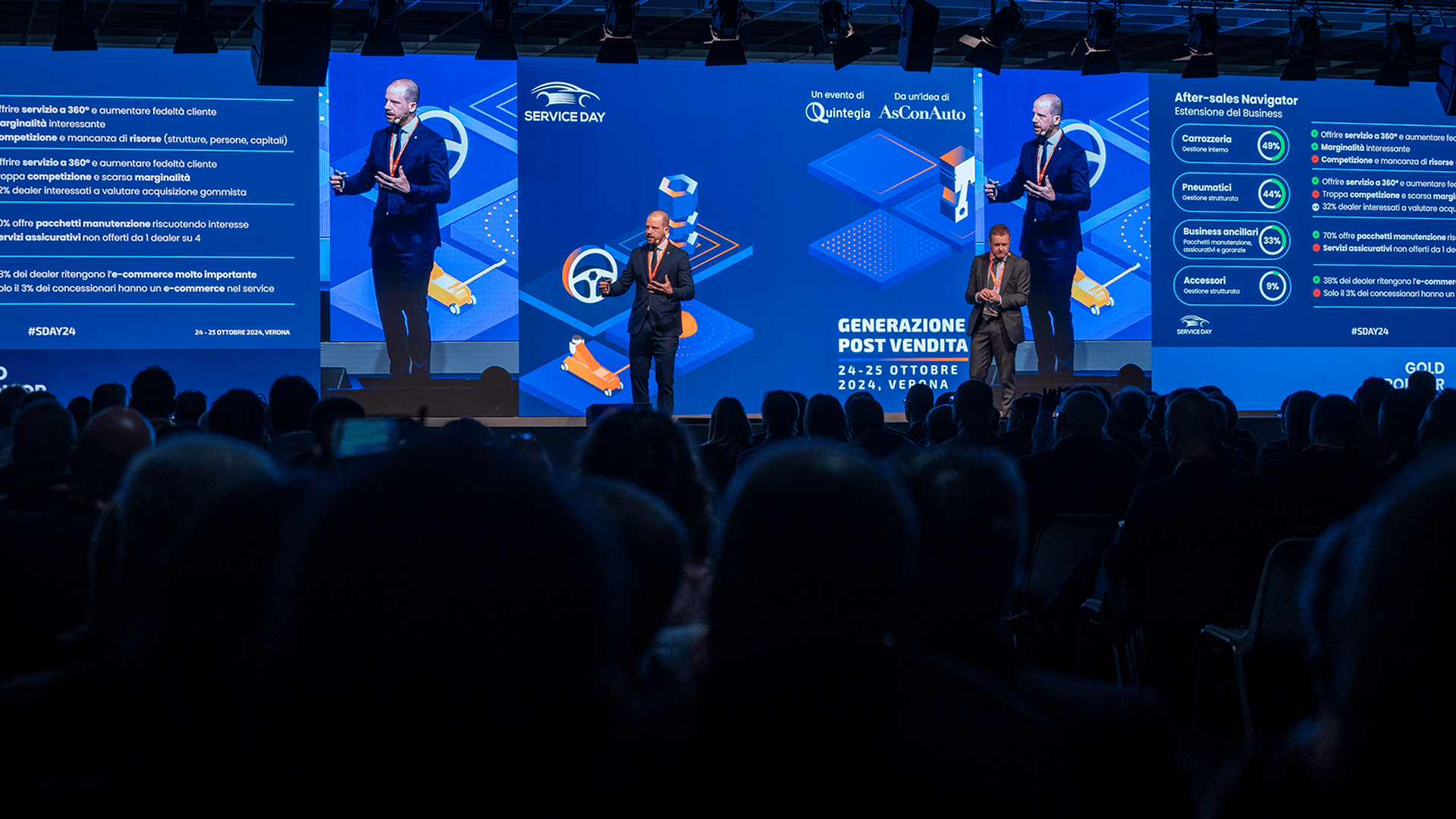


Quintegia’s study highlights the increasingly strategic role of aftersales and the drivers that will fuel dealership growth in the post-sales arena—spotlighting service as a key value engine and the Service Manager as a pivotal figure in the transformation.
Today, 29% of Italian dealerships can be considered “advanced” in aftersales management: they operate with a highly structured approach across offering, organization, and processes—the three top development priorities. The remaining 71% recognize aftersales as a tangible growth opportunity but have not yet put a structured organizational model in place. This is the picture drawn by Quintegia’s After-Sales Navigator 2025, confirming that aftersales is becoming increasingly central to dealership business models and a true strategic core of the company.
The data also show that aftersales is now the primary hub of the customer relationship. 88% of drivers choose to return to the same repairer for maintenance, and 80% would be willing to buy their next vehicle from the same dealership if they received excellent service.1
These numbers explain why service is seen as a reliable engine for margins, trust, and recurring revenue.
_________
¹ Source: Service Customer Study 2025, a Quintegia study supported by Aufinity Group.1
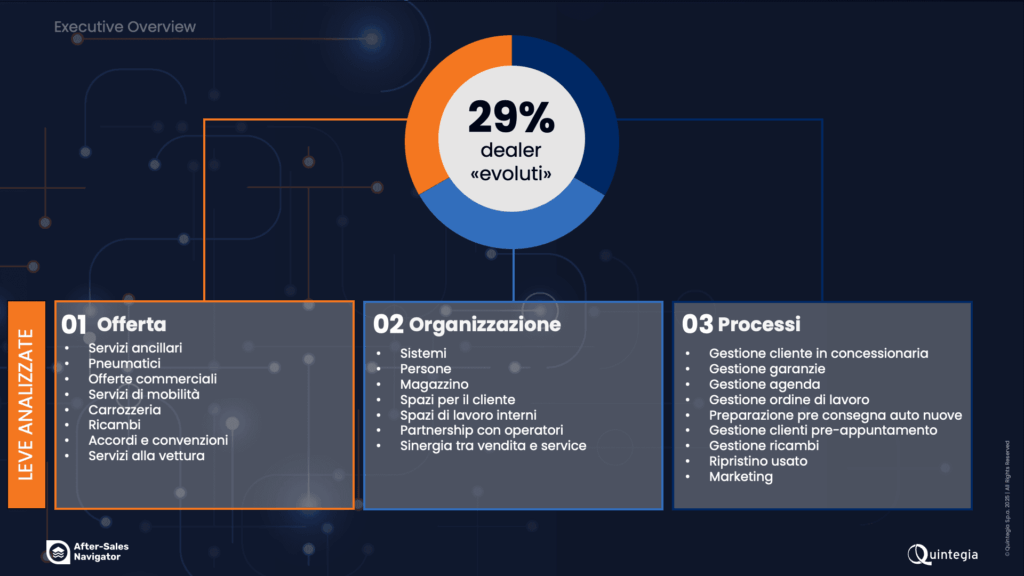
According to the dealers involved in the study, expanding the range of ancillary services—from scheduled maintenance plans and extended warranties to insurance coverage—is one of the most effective levers to increase customer value and loyalty. Significant growth potential also emerges in traditional areas such as body shop services and tires. But what truly makes the difference is internal organization: integrating sales and service, investing in advanced technical skills to keep up with the growing technological complexity of new vehicles, and introducing managerial and team-leadership practices capable of steering market evolution—these are the key priorities to address.
Another crucial front is process design. Marketing becomes a catalyst for aftersales, particularly in the dealer’s ability to communicate its service offer effectively and maintain an ongoing relationship with customers. Digitizing touchpoints—starting with online booking and extending across the entire customer journey—is identified as a priority area to modernize and elevate the customer experience.
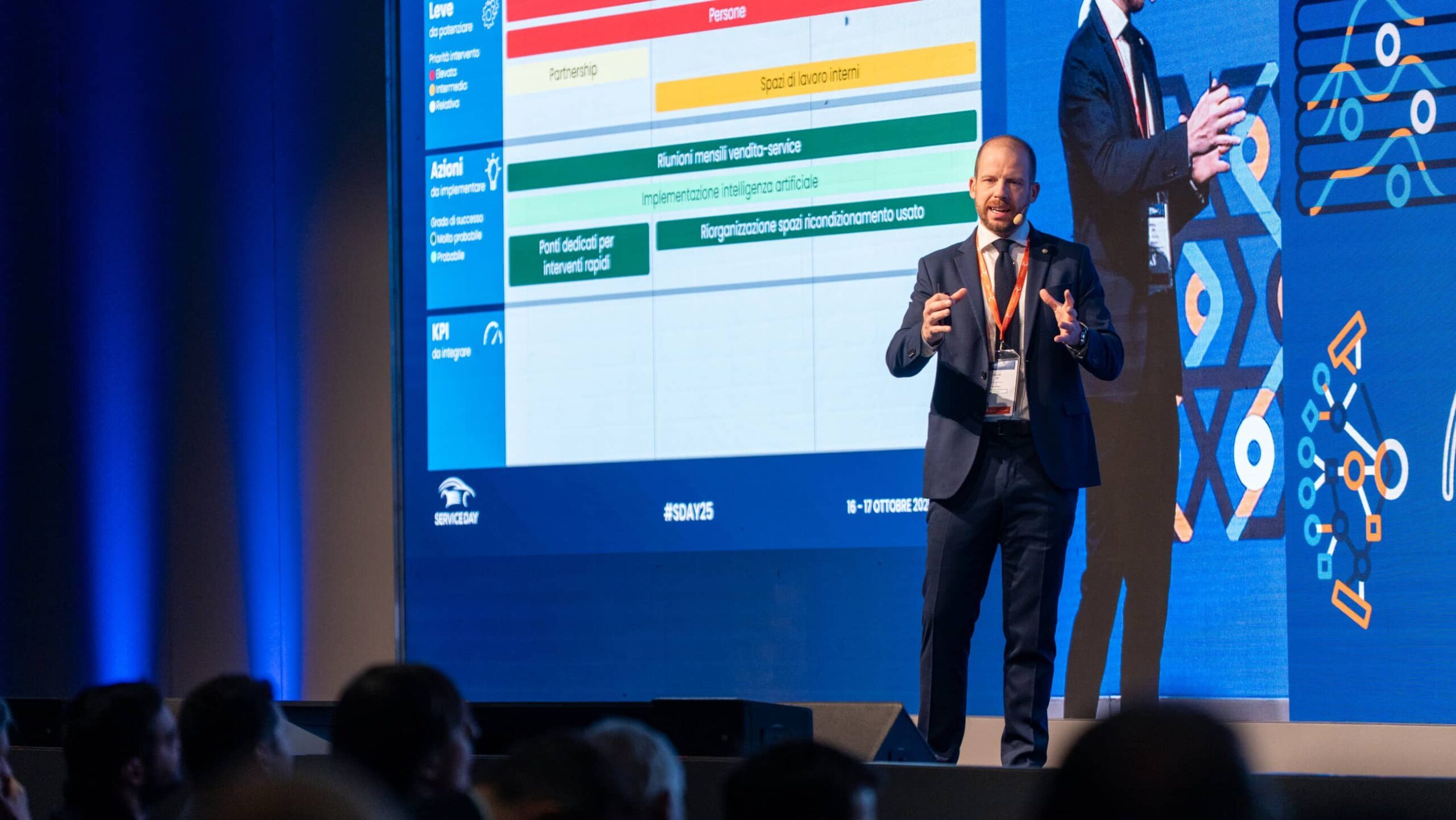
In this context, the Service Manager role is being reshaped. Today, Service Managers spend over 60% of their time on day-to-day operations, while only 19% goes to efficiency improvements and 18% to strategic activities. The study’s ideal model rebalances this mix to meet a more complex environment, shifting toward roughly 60% focus on innovation and processes and 40% on operations. This evolution positions the Service Manager as the true “orchestrator” of change, responsible for leading digitalization and aftersales business development. It is a role that demands leadership, vision, and the ability to guide every stage of the customer relationship.
Overall, the After-Sales Navigator 2025 outlines a scenario in which success depends on the right balance between execution and innovation, the ability to read and use data effectively, and the willingness to rethink organizational models strategically—placing aftersales at the center of the customer relationship.